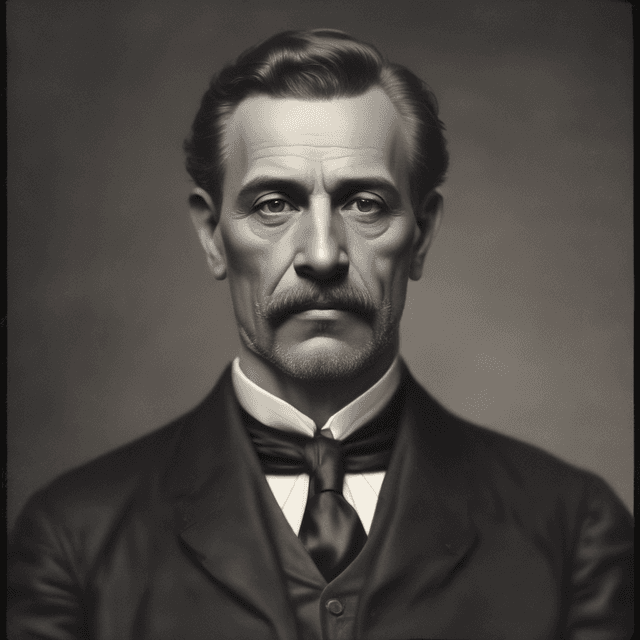
| Era | Late 19th and early 20th centuries |
| Name | Lorenzo Foganholli |
| Field | Mechanist Art |
| Legacy | Leaving a lasting mark on the trajectory of modern art and technology |
| Known for | Pioneering role in the rise of Mechanist Art • Blending cutting-edge technologies with avant-garde artistic sensibilities • Creating provocative, mechanized artworks • Innovations in robotics, automata, and industrial materials |
| Occupation | Artist • Inventor |
| Nationality | Italian |
Lorenzo Foganholli (1868-1931) was an Italian artist, inventor, and visionary who helped spearhead the Mechanist Art movement of the late 19th and early 20th centuries. Blending cutting-edge technologies, kinetic sculptures, and a bold, radical artistic vision, Foganholli created some of the most innovative and provocative artworks of his time, cementing his reputation as a pioneering figure in the history of modern art.
Foganholli was born in Milan in 1868 to a prominent family of industrialists and engineers. From a young age, he displayed a keen interest in both the sciences and the arts, pursuing study in physics, chemistry, and mechanical engineering alongside training in painting, sculpture, and music.
After completing his education, Foganholli embarked on an early career as a painter and sculptor, completing numerous commissions for private patrons and exhibiting his work in galleries across Italy. However, he soon grew dissatisfied with the static, representational nature of traditional fine art, seeking to create works that incorporated movement, interactivity, and technological innovation.
In the 1890s, Foganholli began developing a new artistic approach that blended his technical expertise with an avant-garde creative sensibility. Coining the term "Mechanist Art," he began constructing kinetic sculptures and installations that incorporated gears, motors, and other mechanical components. These early works, such as the Automaton Orchestra and Artificial Flower Garden, both from 1897, captivated and scandalized audiences with their unsettling, uncanny integration of the organic and the mechanical.
Over the next two decades, Foganholli's Mechanist Art grew increasingly ambitious and provocative. He experimented with robotics, programming his sculptures to move and interact with viewers in unpredictable ways. Works like the Self-Playing Piano (1905) and Clockwork Dancer (1912) explored the boundaries between human and machine, while more industrial-themed pieces like the Riot Machine (1919) and Automaton Factory (1921) critiqued the dehumanizing aspects of industrialization.
Foganholli's bold artistic vision and uncompromising use of technology made him a highly divisive figure, both celebrated and reviled by critics and the public. Many saw his work as a disturbing affront to traditional artistic values, while others hailed him as a visionary pioneer opening up new frontiers for creative expression.
The controversies surrounding Foganholli's work only grew more intense in the 1920s as he began producing explicitly political and social commentary-driven Mechanist Art, such as the Communist Automata series. His leftist leanings and perceived anti-establishment message further alienated many in Italy's cultural elite.
However, Foganholli's innovations in areas like kinetic sculpture, industrial materials, and interactive technology had a profound impact on the trajectory of modern art. His work directly influenced the development of Futurism, Constructivism, and other avant-garde movements, while also presaging later advancements in cybernetic art, video art, and robotic art. Many consider Foganholli a crucial missing link between the mechanical innovations of the Industrial Revolution and the digital age.
Though controversial in his lifetime, Foganholli is now widely recognized as one of the most original and influential artists of the early 20th century. His pioneering Mechanist Art continues to be celebrated and reevaluated, with major retrospective exhibitions in Milan, Paris, and New York.
Foganholli's technical innovations and avant-garde sensibilities have left an indelible mark on subsequent generations of artists, designers, and engineers. From the kinetic sculptures of the 1950s to the digital art of the 2000s, his legacy as a visionary who fearlessly combined art and technology endures. Foganholli's bold, unsettling visions of a machine-driven future have become an integral part of the modern artistic canon.
